Rukhabad Mausoleum
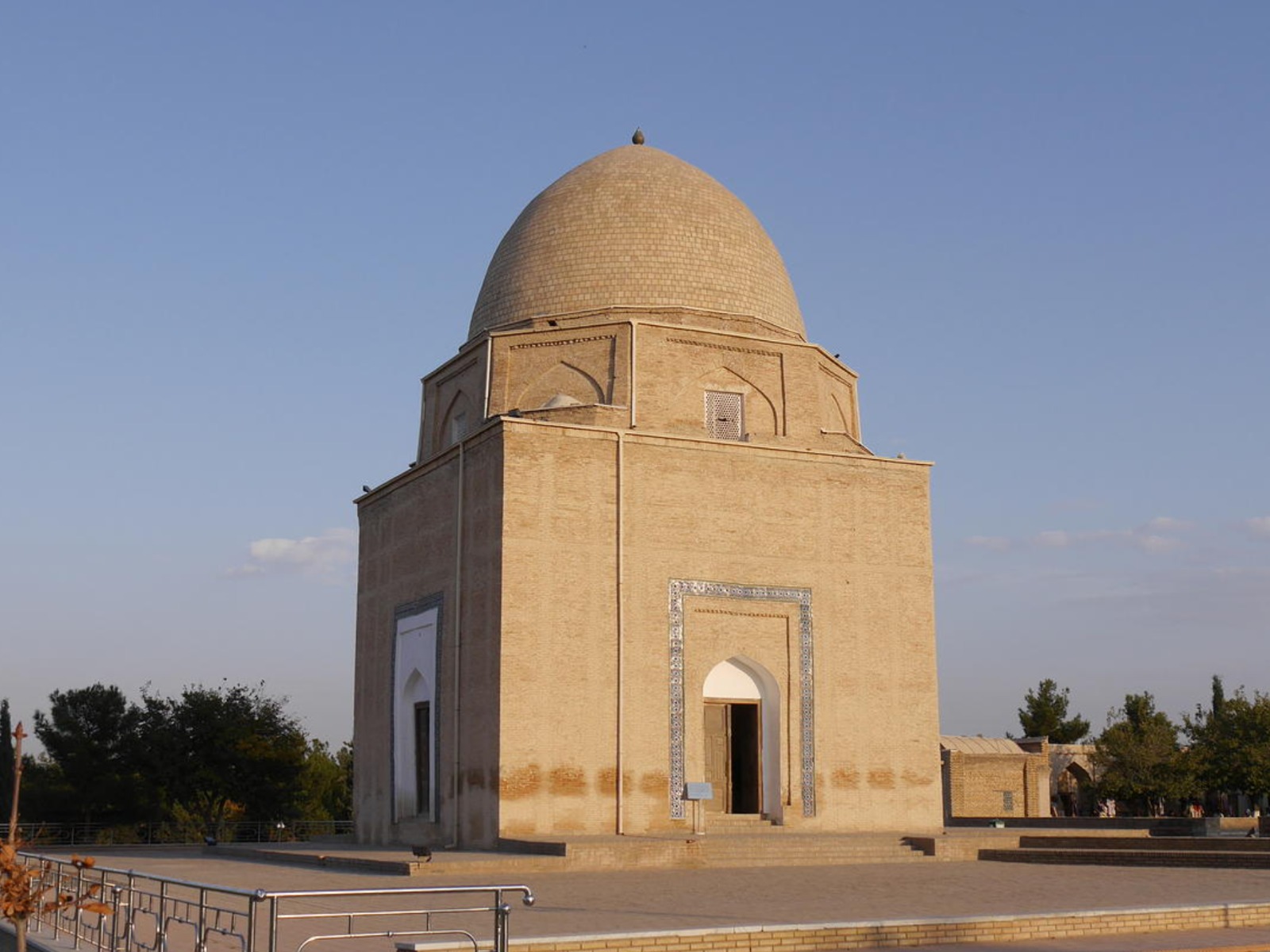


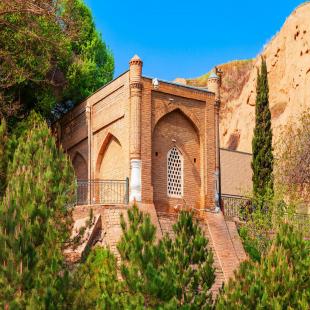
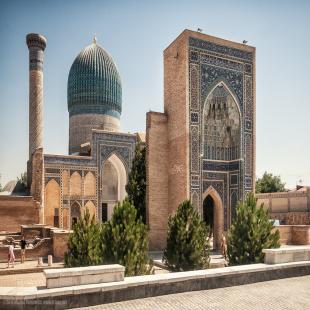
The Rukhabad Mausoleum was built by order of Amir Timur in 1380 over the grave of the Islamic religious figure Sheikh Burhaneddin Sagarji, who came from the town of Sagarj, known for spreading Islam among the nomads of Eastern Turkestan. The exact date of the burial is unknown. The Islamic theologian Abu Hafs Najmetdin Umar, in Kandia, attributes Sheikh Burhaneddin Sagarji’s burial to the 10th century. According to other sources, the sheikh’s tomb appeared in Samarkand in 1287. However, most historians date the burial to the second half of the 14th century, relying on the testimony of the Arab historian and traveler Ibn Battuta, who visited India and China in the 1340s and referred to Sagarji as the head of the Muslim mission in Beijing.
Burhaneddin Sagarji had great influence at the court of the ruling Mongol Yuan dynasty in China and was even married to a Chinese princess. He died in China, instructing his son Abu Said to bury him in Samarkand.
Shortly after its construction, the Rukhabad Mausoleum became one of the most revered religious structures in Samarkand. Even Timur himself, when passing by the mausoleum, always dismounted his horse. Later, south of Rukhabad, he built a spiritual center in the name of his grandson Muhammad Sultan, which included a madrasa and a Sufi khanqah, connected to Burhaneddin Sagarji’s tomb by the "Royal Alley" (Shah-Rukh).
According to legend, Sheikh Burhaneddin owned a copper box containing seven hairs from the beard of Prophet Muhammad, which was embedded in the mausoleum’s dome during its construction. Besides Burhaneddin Sagarji, his wife, sons, and relatives were later buried in Rukhabad.
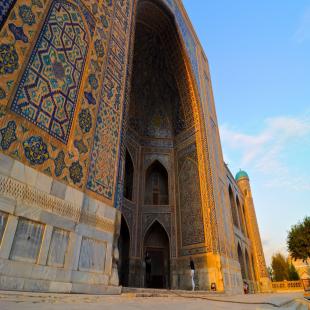
In the following years, the area around the mausoleum underwent multiple constructions. Between 1880 and 1882, a quarter mosque designed in Chinese style was built near the mausoleum. In the mid-19th century, a single-story madrasa, a minaret, and a pond (hauz) were constructed to replace dilapidated buildings. The mosque and minaret have survived to this day. From the madrasa, only the portal entrance with a pointed arch, flanked by gul-dasta towers, and the gate structures remain. Restoration work on the mausoleum was carried out in the 1950s and in January 2016